


There are many different urinary catheter configurations, but the main differences are easier to understand when they are broken down into a few simple choices: intermittent or indwelling, 2-way or 3-way, catheter material, length and tip design.
Important: This guide provides a straightforward overview of the main urinary catheter types and shows how these differences relate to the UNOQUIP urinary catheter range supplied by Ebrington Medical.
It is intended as a product and terminology guide rather than a guide to catheter insertion or individual catheter selection.
View the UNOQUIP Urological Drainage range
View the UNOQUIP Urinary Catheters catalogue
View Eb-Med's Urine Collection solutions
 Urinary catheter types at a glance
Urinary catheter selection guide
The following guide shows how the main catheter categories relate to one another and where the principal UNOQUIP options sit within them.
View UNOQUIP catheter options
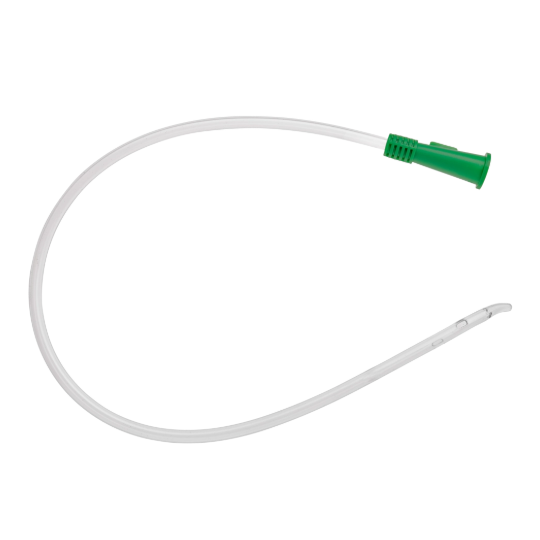
1. DOES THE CATHETER REMAIN IN THE BLADDER?
NO
Inserted when required for short-term drainage and then removed. |
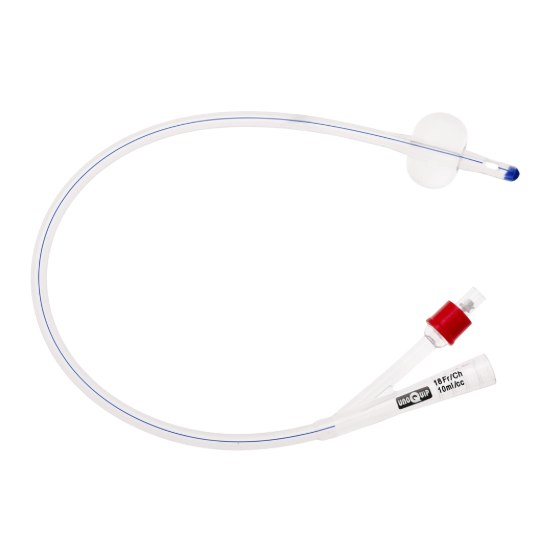
YES
The catheter remains in the bladder and is retained by an inflatable balloon. |
2. FOR AN INDWELLING CATHETER: ROUTINE DRAINAGE OR POSTOPERATIVE / SPECIALIST USE?
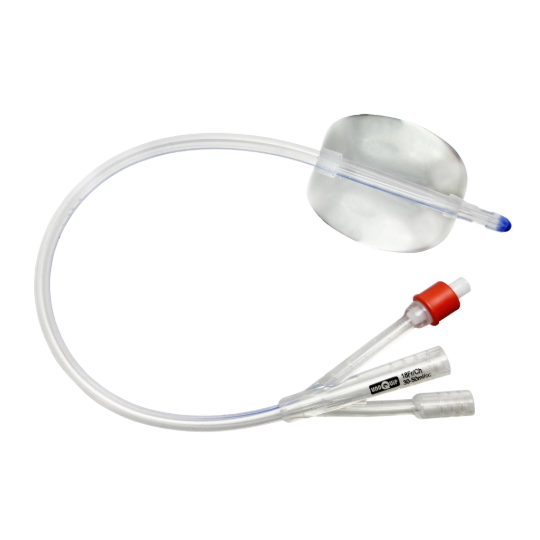
Routine / longer-term drainage2-way Foley catheter A 2-way Foley has a drainage lumen and a separate channel for balloon inflation. Two channels:
2-way configurations are found across the UNOQUIP silicone Foley, Integral Balloon Foley and hydrophilic latex ranges, as well as selected postoperative products. |
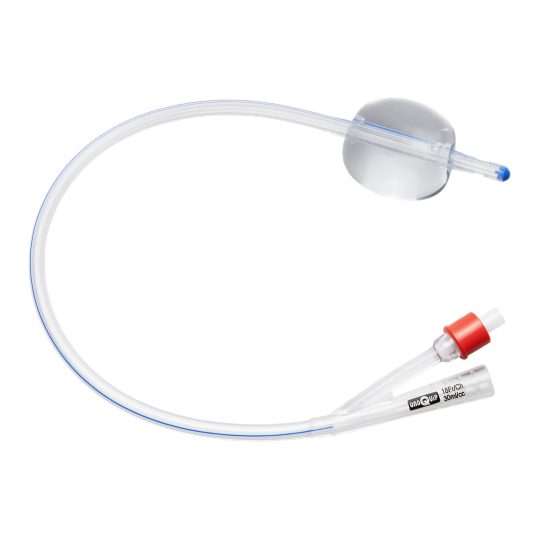
Postoperative / specialist drainage2-way or 3-way postoperative Foley catheter UNOQUIP postoperative silicone catheters are designed for postoperative drainage, tamponade and irrigation requirements. Three channels:
UNOQUIP offers specialist postoperative 3-way options for drainage and irrigation following surgical procedures. Typical setting: specialist / acute care. RCN catheter-care guidance describes continuous bladder irrigation using a three-way catheter as an intervention normally undertaken for short periods within an acute-care setting. Read the Royal College of Nursing catheter-care guidance
|
3. WHICH TIP CONFIGURATION IS REQUIRED?
|
|
|
Couvelaire tip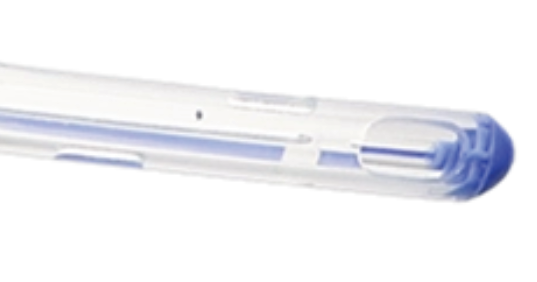 An open/fluted postoperative tip designed to help drain blood, clots and debris, and is not inherently sex-specific. An open/fluted postoperative tip designed to help drain blood, clots and debris, and is not inherently sex-specific. Primary User: Male and Female Catheter Length Selection: Standard |
Dufour tip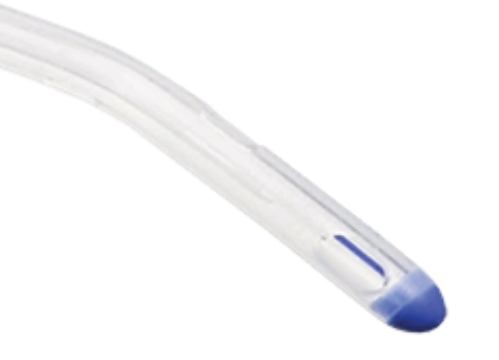 A curved postoperative tip with large drainage eyes, commonly used where haematuria, clots or bladder irrigation are involved. Not inherently sex-specific. A curved postoperative tip with large drainage eyes, commonly used where haematuria, clots or bladder irrigation are involved. Not inherently sex-specific. Primary User: Male and Female Catheter Length Selection: Standard |
Mercier tip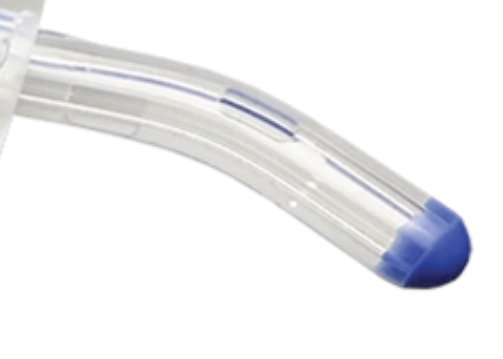 An angled/curved specialist tip commonly associated with male urological and postoperative catheterisation. An angled/curved specialist tip commonly associated with male urological and postoperative catheterisation. Primary User: Male Catheter Length Selection: Standard |
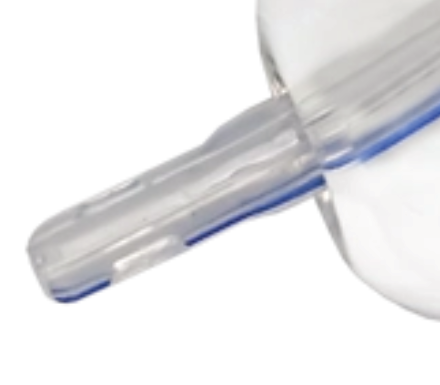 Open tip
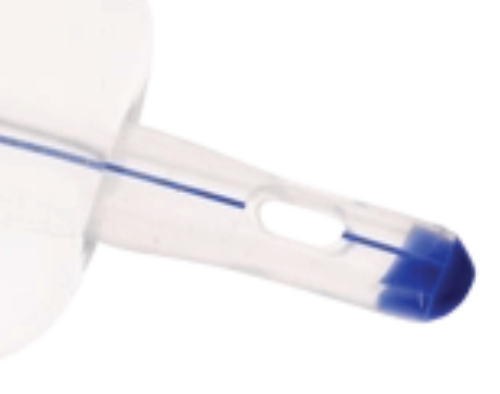 Nelaton / Cylindric tip
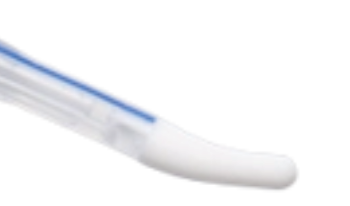 Tiemann tip
Tip selection should be based on the intended clinical application, individual patient requirements and the relevant manufacturer instructions.
 UNOQUIP 100% Silicone Foley Catheters
The UNOQUIP 100% Silicone Foley Catheter range covers a broad range of acute and long-term indwelling drainage requirements for hospital and home-care settings.
The range includes male and female lengths, paediatric catheters, Tiemann-tip catheters and open-tip options. The manufacturer's current catalogue states that its 2-way silicone Foley catheters can be retained for up to 90 days, subject to the individual product specification and appropriate clinical use.
The catalogue also states that UNOQUIP's 2-way silicone Foley catheters may be used for transurethral or suprapubic urinary drainage where indicated.
Explore UNOQUIP 100% Silicone Foley Catheters
View catheter sizes and configurations in the UNOQUIP catalogue
UNOQUIP Integral Balloon Foley Catheters
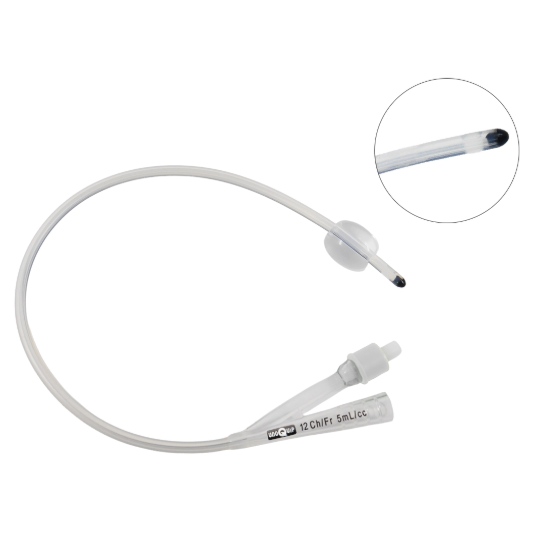 UNOQUIP Integral Balloon Foley Catheters
UNOQUIP also offers Integral Balloon Foley Catheters, using a low-profile integral balloon design within its silicone Foley range.
These are 2-way indwelling catheter options intended for acute and longer-term urinary drainage, with Nelaton / cylindrical and Tiemann-tip configurations available within the range.
View the UNOQUIP Foley catheter range
UNOQUIP Postoperative Silicone Foley Catheters
The UNOQUIP Postoperative Silicone Foley Catheter range is designed for specialist postoperative urinary drainage, tamponade and irrigation applications.
Unlike standard Foley ranges, postoperative options include both 2-way and 3-way configurations and specialist tip designs including cylindrical, Couvelaire, Dufour and Mercier variants.
Three-way configurations provide an additional channel for irrigation and are therefore primarily associated with specialist acute-care applications rather than routine community catheterisation.
View UNOQUIP postoperative catheter configurations
UNOQUIP Hydrophilic Latex Foley Catheters
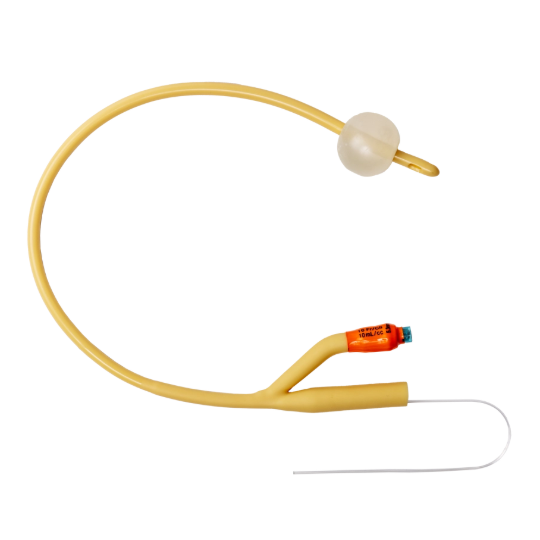 UNOQUIP Hydrophilic Latex Foley Catheters
The UNOQUIP range also includes hydrophilic latex Foley catheters for transurethral urinary drainage.
These are latex catheters with a hydrophilic coating and are available in several configurations, including standard and female lengths, paediatric sizes and selected postoperative 3-way options.
Material selection should take account of the individual product specification, intended duration and relevant clinical considerations, including known material sensitivities.
View UNOQUIP hydrophilic latex catheter options
UNOQUIP Intermittent Catheters
An intermittent catheter provides a temporary pathway for bladder drainage and is removed after use rather than remaining in position.
The UNOQUIP intermittent range includes Nelaton, female-length Nelaton and Tiemann-tip catheters, together with protective-sheath, Extra-Soft and paediatric options.
The NHS advises that people carrying out intermittent self-catheterisation should be appropriately taught how to do so.
Read NHS information on intermittent catheters
View UNOQUIP intermittent catheter options
Understanding the final catheter configuration
Male or female catheter length?
Male and female catheter descriptions often relate to catheter length rather than an entirely different catheter type.
The UNOQUIP range includes female-length versions within selected silicone Foley, hydrophilic latex and intermittent catheter families.
Catheter length should be selected according to the intended use, individual clinical requirements and the manufacturer's instructions.
Nelaton or Tiemann tip?
A Nelaton or cylindrical tip is a straight, rounded catheter-tip design commonly found across Foley and intermittent catheter ranges.
A Tiemann tip, also called a Coudé tip, has a curved tip. RCN guidance describes the curved design as helping negotiate the upward bend of the male urethra.
UNOQUIP offers Tiemann variants within both its silicone Foley and intermittent catheter ranges. Specialist tip selection should be based on appropriate clinical assessment.
What about open-tip Foley catheters?
The UNOQUIP 100% silicone Foley range includes open-tip configurations alongside standard Nelaton and Tiemann-tip options.
UNOQUIP describes these as options for improved drainage and optional guidewire use. They are specialist product configurations and should be selected according to the intended clinical application and product instructions.
Silicone or hydrophilic latex?
Both materials are represented within the UNOQUIP Foley portfolio, but they should not be treated as interchangeable solely on the basis of material.
The UNOQUIP 100% silicone range covers acute and long-term applications including hospital and home care, while the manufacturer describes its hydrophilic latex range for transurethral bladder drainage with multiple configurations available.
Selection should take account of the specific product's intended use, duration, patient requirements, material sensitivities and relevant clinical guidance.
Are 3-way catheters for home use?
A 3-way Foley catheter has an additional lumen that can be used for bladder irrigation. These products are associated primarily with specialist postoperative and acute-care applications.
Current RCN guidance states that continuous bladder irrigation through a three-way catheter is normally used for short periods within an acute-care setting.
For that reason, this guide describes UNOQUIP postoperative 3-way catheters as specialist / acute-care products rather than using the term "restricted catheter" or implying a general legal restriction on supply.
Where do suprapubic catheters fit into the guide?
A suprapubic catheter is an indwelling catheter that enters the bladder through an opening in the abdomen rather than through the urethra.
The NHS lists suprapubic catheterisation separately from urethral intermittent and indwelling catheterisation. Placement is a clinical procedure, although ongoing catheter care may subsequently take place outside hospital.
The current UNOQUIP catalogue states that its 2-way silicone Foley catheters may also be used for suprapubic urinary drainage where appropriate.
Choosing between the main UNOQUIP catheter ranges
The UNOQUIP urinary catheter portfolio can be broadly grouped according to the intended type of drainage and product configuration.
| UNOQUIP range | Main distinction | Key options |
|---|---|---|
| Intermittent Catheters | Temporary urinary drainage followed by catheter removal | Nelaton, female, Tiemann, protective sheath, Extra-Soft and paediatric |
| 100% Silicone Foley Catheters | 2-way indwelling drainage | Nelaton, Tiemann, open tip, male / standard and female length, paediatric |
| Integral Balloon Foley Catheters | 2-way silicone Foley with integral balloon design | Nelaton and Tiemann configurations |
| Hydrophilic Latex Foley Catheters | Hydrophilic-coated latex Foley | Standard, female, paediatric and selected postoperative options |
| Postoperative Silicone Foley Catheters | Specialist postoperative drainage and irrigation | 2-way / 3-way; cylindrical, Couvelaire, Dufour and Mercier tip configurations |
Explore the complete UNOQUIP Urological Drainage range
Download the UNOQUIP Urinary Catheters catalogue
Important information about urinary catheter selection
A catheter should not be selected simply by matching a symptom to a product. The appropriate catheter type, size, material, length, tip and configuration depend on the intended clinical use and individual requirements.
NICE states that people who require urinary catheterisation should have their risk of infection minimised through appropriate insertion and maintenance procedures and removal of the catheter as soon as it is no longer needed.
This article is provided for general product and educational information only. It is not a substitute for clinical assessment, professional medical advice or the manufacturer's instructions for use. Catheter insertion, replacement and specialist procedures such as bladder irrigation should be undertaken in accordance with appropriate professional guidance, local procedures and the relevant product instructions.
Read NICE Quality Statement 4: Urinary catheters

 117417
 40002854