
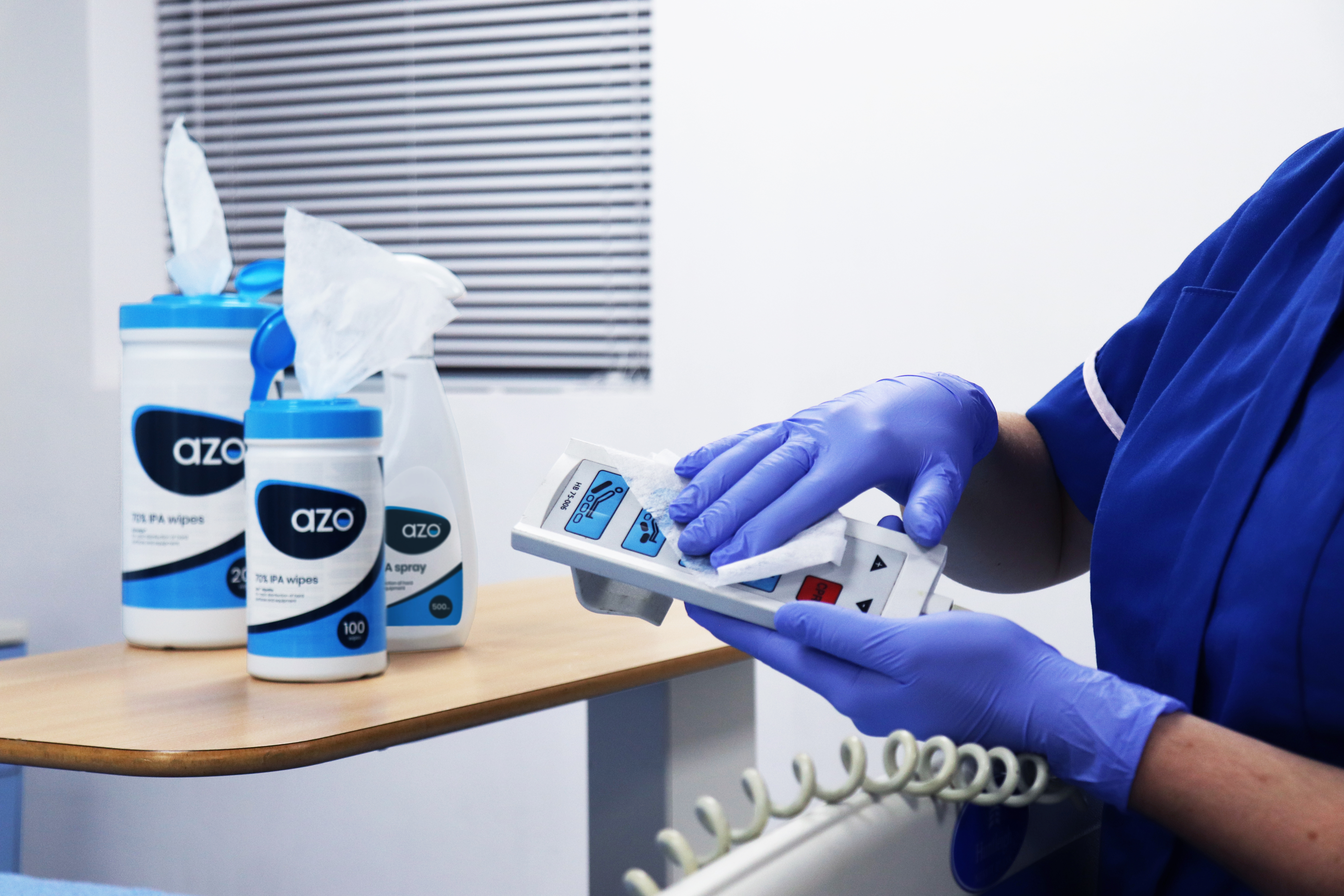
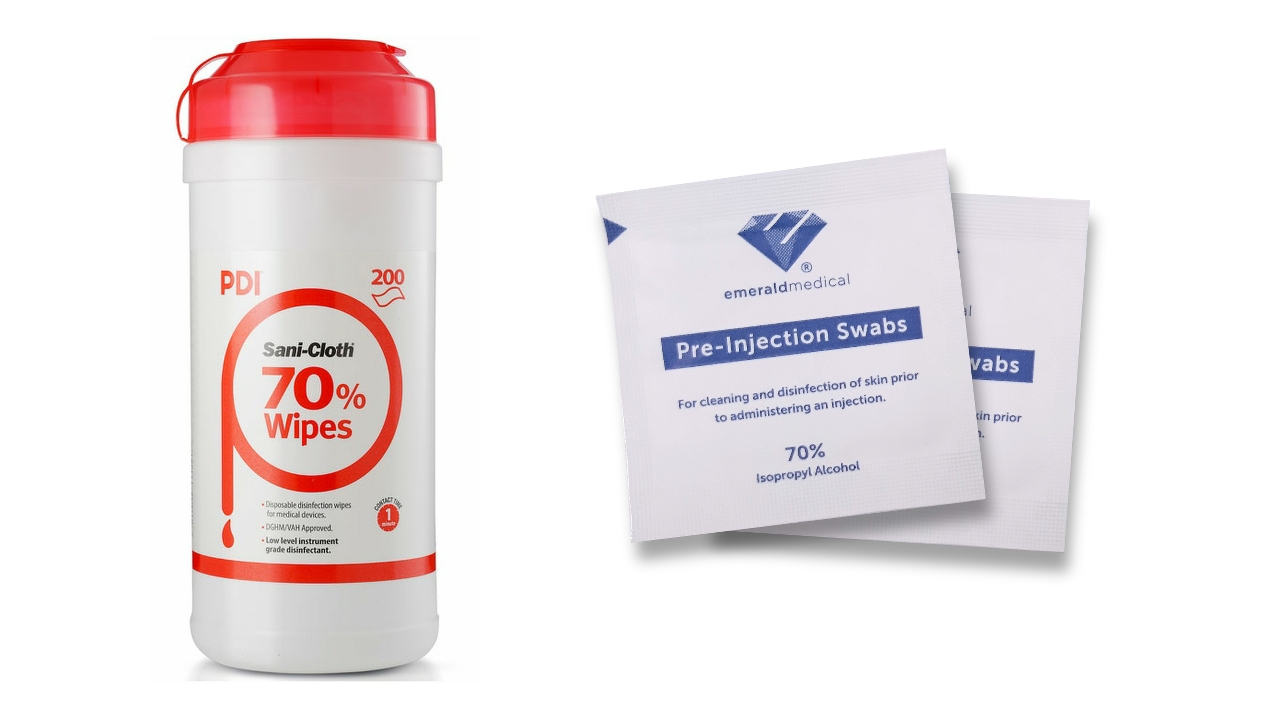
 70% isopropyl alcohol (IPA) wipes are commonly used in healthcare for the disinfection of suitable hard, non-porous surfaces. This guide answers common questions about how alcohol wipes work, why 70% IPA is widely used, what alcohol can and cannot kill, contact time and surface compatibility.
What does IPA mean?
IPA stands for isopropyl alcohol, also known as isopropanol. It is one of the alcohols commonly used in disinfectant formulations.
According to the US Centers for Disease Control and Prevention (CDC), alcohol solutions show their optimum bactericidal activity at concentrations broadly between 60% and 90%, while activity falls significantly at lower concentrations.
Read the CDC guidance on chemical disinfectants
 Why is 70% IPA commonly used for disinfection?
 Why is 70% IPA commonly used for disinfection?
It may seem logical that 100% alcohol would disinfect more effectively than a 70% solution, but alcohol concentration is only part of the picture.
Alcohol acts primarily by denaturing proteins within susceptible microorganisms. The presence of water assists this process, which is one reason aqueous alcohol formulations are widely used for disinfection.
A 70% IPA formulation sits within the concentration range commonly used for healthcare disinfection. However, different commercial products may have different efficacy claims and contact times, so users should always refer to the specific product instructions.
How do alcohol wipes work?
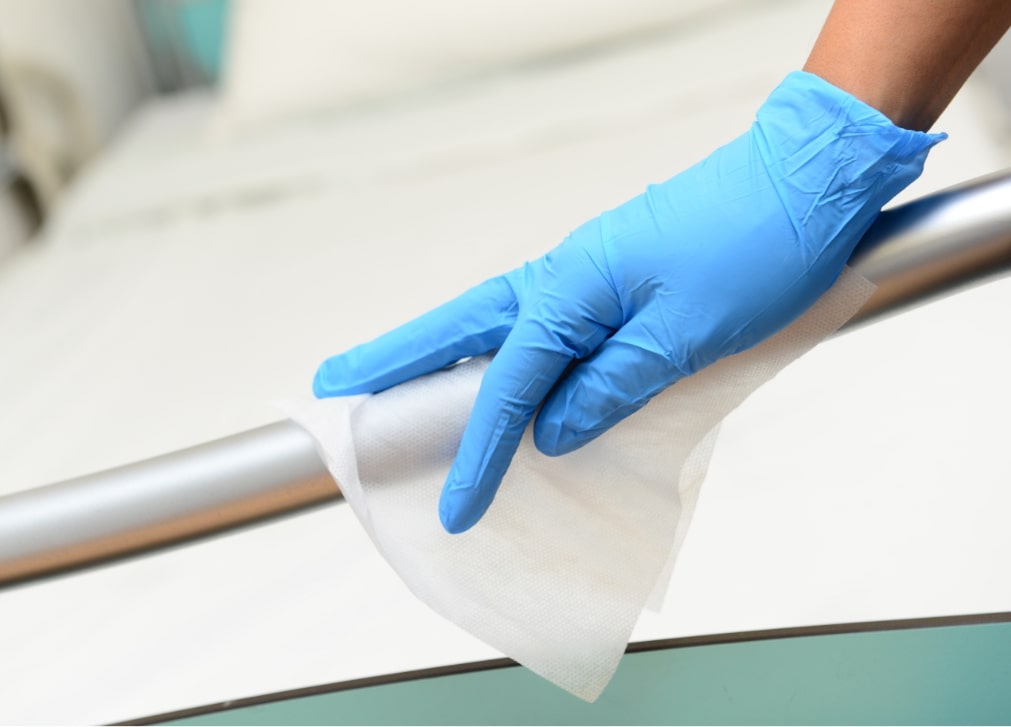
Alcohol wipes combine a disinfectant formulation with the physical action of wiping. The wipe helps distribute the disinfectant across the surface, while the alcohol acts against susceptible microorganisms.
Correct use remains important. A disinfectant should be applied in accordance with its instructions for use, including any required contact time.
Vernacare publishes efficacy data for its Azo® 70% IPA products against specified microorganisms using recognised test standards, with contact times varying according to the microorganism and test method.
View Azo® Alcohol efficacy and product information from Vernacare
Frequently asked questions about 70% IPA
What does 70% IPA kill?
Alcohols can be active against a range of vegetative bacteria, fungi and viruses, but they are not effective against every microorganism.
Rather than assuming all 70% IPA products have the same efficacy, healthcare users should check the validated claims for the individual product. Vernacare publishes organism-specific efficacy information for Azo® 70% IPA products.
Does alcohol kill bacteria?
Alcohol can be rapidly bactericidal against many vegetative bacteria. Effectiveness depends on the formulation, concentration, microorganism, conditions of use and required contact time.
Does alcohol kill viruses?
Alcohol has virucidal activity against many viruses, but effectiveness varies. Healthcare users should check whether the relevant virus or an accepted surrogate is included in the specific product's validated efficacy data.
Does alcohol kill bacterial spores?
No. Alcohol should not be regarded as sporicidal. The CDC states that alcohols do not destroy bacterial spores.
Where sporicidal activity is required, an appropriate validated sporicidal product or process should be used in accordance with local infection prevention procedures.
Can alcohol wipes sterilise a surface?
No. Disinfection and sterilisation are different processes.
Alcohol may be used for suitable disinfection applications, but it is not a substitute for a validated sterilisation process. The CDC does not recommend alcohol for sterilising medical and surgical materials, principally because alcohol lacks sporicidal activity.
Do alcohol wipes need a contact time?
Yes. Disinfectants should be used according to their validated instructions, including the specified contact time.
Contact time can differ by organism and efficacy test. Vernacare's current Azo® Alcohol product information lists contact times according to its individual efficacy claims.
Should a visibly dirty surface be cleaned first?
Cleaning is an important part of effective disinfection where dirt, organic matter or other contamination is present. CDC guidance explains that removing organic and inorganic material supports the effectiveness of subsequent disinfection and sterilisation processes.
Read the CDC Guideline for Disinfection and Sterilization in Healthcare Facilities
Can 70% IPA be used on every surface?
No. Alcohol can be incompatible with some plastics, rubbers, coatings and other materials after repeated use.
For medical equipment, check the equipment manufacturer's instructions for use as well as the disinfectant manufacturer's guidance before establishing a routine cleaning or disinfection process.
Azo® 70% IPA products available from Ebrington Medical
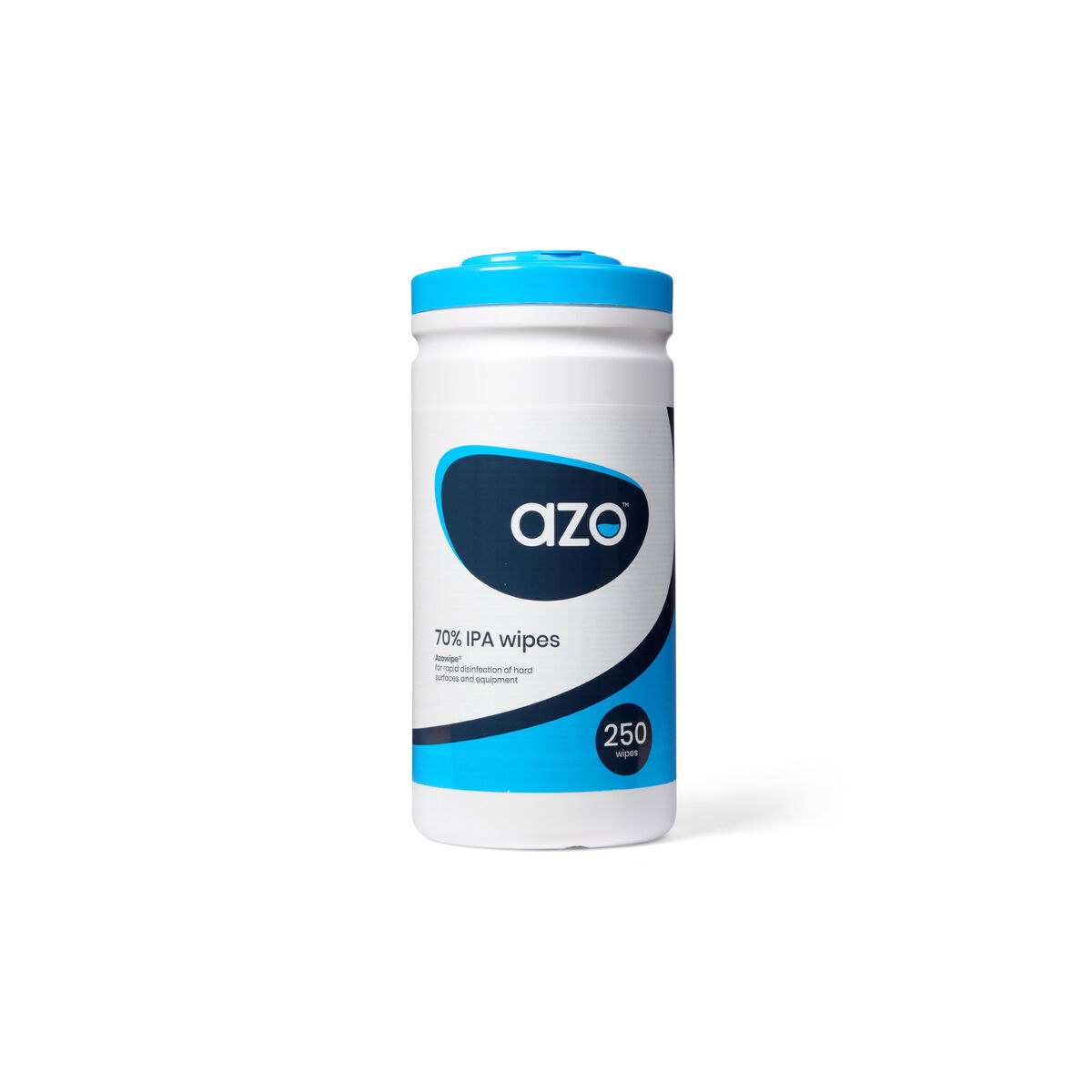 Azo® 70% IPA products available from Ebrington Medical
Ebrington Medical supplies a range of Azo® 70% IPA disinfection products, including standard wipes, larger-volume wipe formats, spray and sterile double- and triple-bagged IPA wipe options.
View surface wipes and cleaners
Selected products are available through HSC Contract 5841745.
Product selection should be based on the intended application, required efficacy, surface compatibility, relevant manufacturer instructions and local infection prevention procedures.
 117417
 40002854