

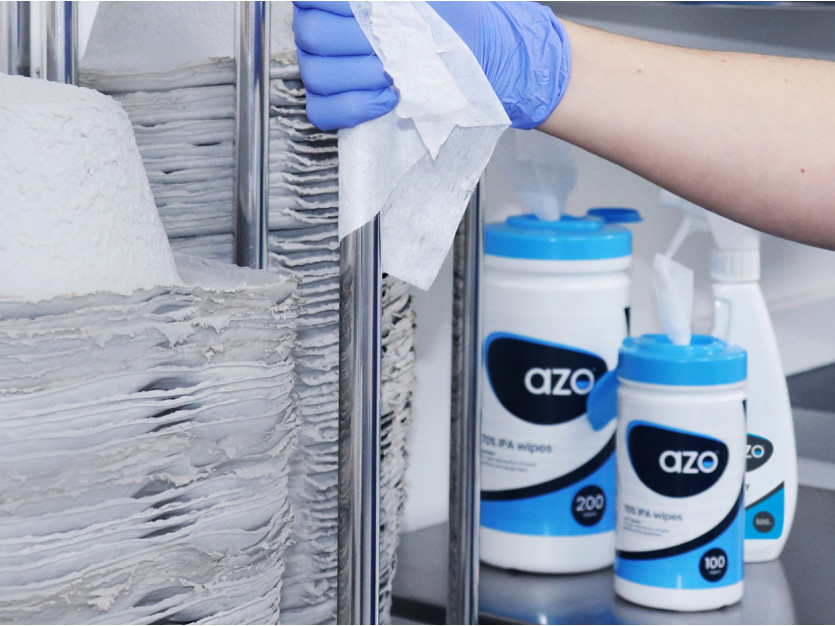
 There is no single disinfectant wipe that is suitable for every piece of medical equipment. The right choice depends on the device, the surface material, how the equipment is used, the level of decontamination required and, importantly, the manufacturer's instructions for cleaning and disinfection.
Can you use alcohol wipes on medical equipment?
70% isopropyl alcohol (IPA) wipes can be appropriate for some reusable, non-invasive medical equipment, provided the product is suitable for the device and its use is supported by the equipment manufacturer's instructions.
NHS England's guidance on decontaminating reusable non-invasive care equipment specifically advises healthcare staff to check the manufacturer's instructions for the suitability of cleaning products, particularly when dealing with electronic equipment. It also gives stethoscopes disinfected with 70% isopropyl alcohol as an example where this is recommended by the manufacturer.
The important principle is therefore not that 70% IPA should be used on all medical equipment. The disinfectant needs to be appropriate for the particular device, surface and infection prevention requirement.
NHS England – Decontamination of reusable non-invasive care equipment
Why do the equipment manufacturer's instructions matter?
Medical equipment can contain a wide range of materials, including plastics, rubbers, adhesives, display coatings, seals and sensitive electronic components.
A disinfectant may provide the required microbiological efficacy but still be unsuitable for a particular device or surface.
NHS England's National Infection Prevention and Control Manual advises healthcare organisations to follow manufacturers' guidance for the use and decontamination of care equipment. Reusable non-invasive equipment should also be decontaminated between patients or uses in accordance with the manufacturer's instructions and the organisation's agreed protocol.
NHS England – National Infection Prevention and Control Manual
Before establishing a routine cleaning or disinfection process, ask two questions:
- Does the product provide the level of cleaning or disinfection required?
- Is that product compatible with the medical device?
 What is the difference between cleaning and disinfecting medical equipment?
 What is the difference between cleaning and disinfecting medical equipment?
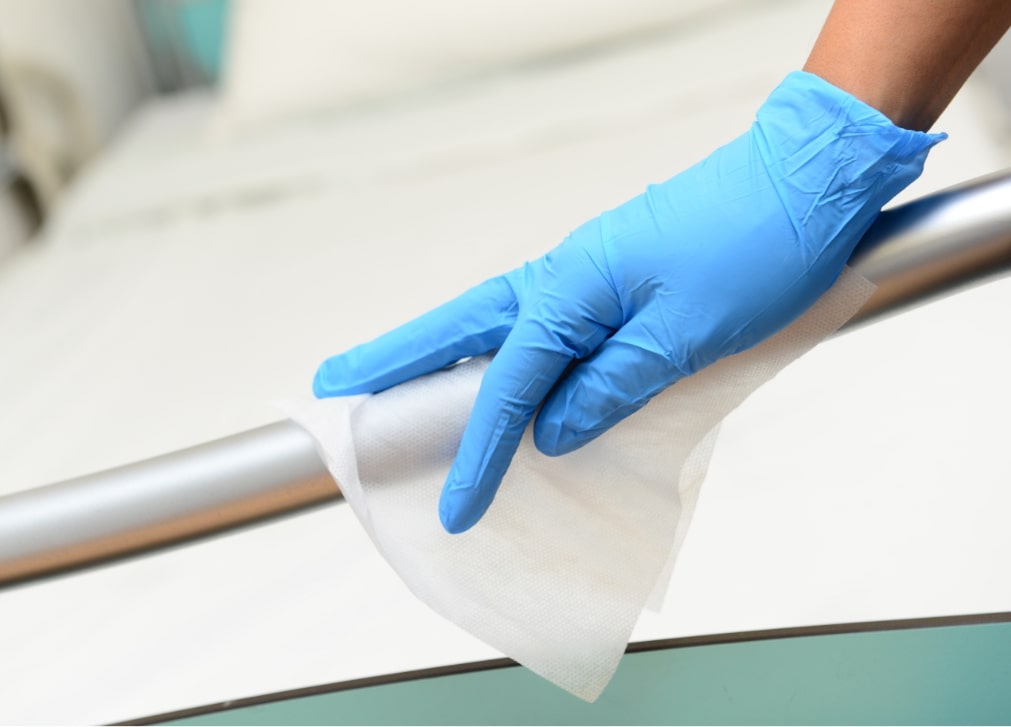
Cleaning and disinfection are related, but they are not the same process.
Cleaning physically removes soil, debris, organic material and microorganisms from a surface.
Disinfection uses a validated process or chemical product to destroy, inactivate or significantly reduce specified microorganisms.
The Health Service Executive (HSE) in Ireland describes decontamination as a combination of processes that can include cleaning, disinfection and sterilisation. It also uses a risk-based approach to determine the appropriate level of decontamination for reusable medical devices.
HSE guidance classifies non-critical, non-invasive equipment that contacts healthy intact skin — such as a blood pressure cuff — as lower risk. Cleaning is generally required, with additional low-level disinfection potentially appropriate in specific circumstances.
HSE Ireland – Standards for Central Decontamination Units
Frequently asked questions about wipes for medical equipment
Can alcohol wipes be used on patient monitors?
They may be suitable for some monitors, but compatibility should not be assumed.
NHS England specifically advises checking the manufacturer's instructions for the suitability of cleaning products when dealing with electronic equipment.
Before using an alcohol wipe on a patient monitor, check whether the manufacturer permits alcohol on the external casing, controls and display surface. Follow any instructions regarding application, drying and keeping moisture away from ports, openings or electrical components.
Can alcohol wipes be used on touchscreens?
It depends on the screen and its coating. Different manufacturers may specify different approved cleaning and disinfection products.
Do not assume that because 70% IPA is suitable for one touchscreen it will be suitable for another. Follow the device manufacturer's instructions for use.
Can alcohol wipes be used on stethoscopes?
70% isopropyl alcohol may be appropriate for some stethoscopes. NHS England specifically uses a stethoscope disinfected with 70% IPA as an example of disinfecting reusable non-invasive care equipment where recommended by the manufacturer.
The manufacturer's current cleaning and disinfection instructions should still be followed for the particular stethoscope in use.
Can alcohol wipes be used on keyboards and control panels?
Alcohol-based wipes may be appropriate for compatible hard, non-porous controls and equipment surfaces, but suitability should be confirmed with the equipment manufacturer first.
Where a wipe is approved, a pre-saturated format can offer controlled application without spraying liquid directly onto electrical equipment.
Are alcohol wipes suitable for all non-invasive medical devices?
No. “Non-invasive” describes how a device is used; it does not mean that every non-invasive device should be disinfected with the same chemistry.
HSE guidance uses a risk-based approach. Non-critical equipment in contact with healthy skin, such as a blood pressure cuff, can generally be processed by cleaning, with additional low-level disinfection potentially appropriate in specific circumstances.
The correct method should therefore reflect the equipment's use, contamination risk, manufacturer instructions and local infection prevention policy.
When might an alcohol-free disinfectant wipe be more appropriate?
An alternative disinfectant may be appropriate where:
- the equipment manufacturer does not permit alcohol;
- the surface material is incompatible with alcohol;
- cleaning and disinfection are both required;
- a different microbiological efficacy profile is required;
- local infection prevention guidance specifies another product; or
- the particular device's IFU requires another chemistry.
Vernacare also provides an alcohol-free Azo® Universal range intended for routine cleaning and disinfection of non-invasive medical devices and equipment.
What does contact time mean when using a disinfectant wipe?
Contact time is the period for which a disinfectant needs to remain in contact with the surface to meet a particular validated efficacy claim.
Contact times can vary between products and microorganisms. NHS England's decontamination guidance advises following the manufacturer's instructions for safe preparation, use and contact time.
Vernacare publishes organism-specific efficacy information and contact times for its Azo® Alcohol range. Users should refer to the current product information rather than applying a generic contact time to all alcohol wipes.
Should medical equipment be cleaned between patients?
Reusable non-invasive equipment that is shared between patients should be decontaminated between uses in accordance with local procedures and manufacturer guidance.
NHS England's National Infection Prevention and Control Manual states that reusable non-invasive care equipment should be decontaminated between patients, following contamination, at defined intervals and before inspection, servicing or repair.
Can one wipe be used on several pieces of equipment?
Cleaning and disinfection procedures should minimise the risk of transferring contamination from one surface or device to another.
How much surface area can be treated will depend on the wipe size, product instructions, amount of solution available, degree of contamination and required contact time.
A wipe that has become dry or visibly contaminated should not simply be moved from one piece of equipment to another. Follow the wipe manufacturer's instructions and local infection prevention protocol.
How do you choose the right wipe for medical equipment?
Rather than selecting a product based on chemistry alone, work through a simple equipment-specific check:
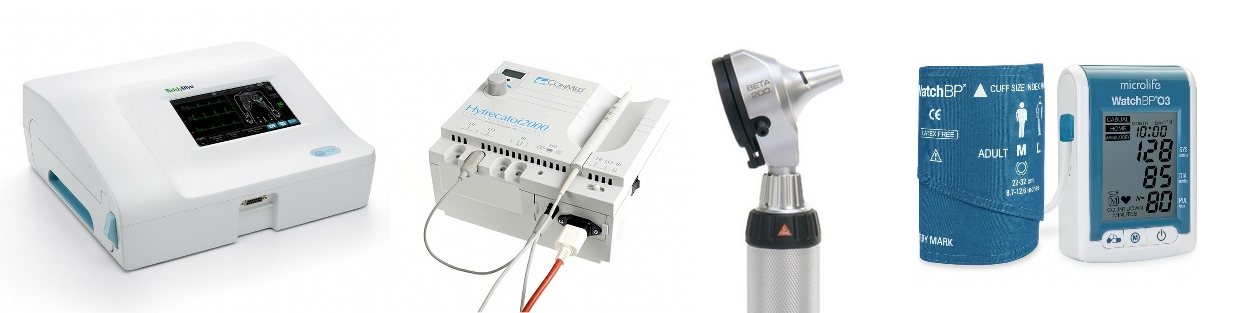
- Identify the equipment. Is it a monitor, touchscreen, stethoscope, blood pressure cuff, keyboard, trolley or another device?
- Check the manufacturer's instructions for use. Confirm which cleaning and disinfecting products are approved.
- Consider the equipment's level of infection risk. Is it a non-critical device contacting intact skin, or does it require a higher level of decontamination?
- Determine whether cleaning, disinfection or both are required.
- Check the disinfectant's validated efficacy. Confirm that the required organisms and relevant test standards are covered.
- Check the required contact time.
- Confirm material compatibility.
- Follow local infection prevention and decontamination procedures.
Not sure which wipe suits which surface?
 Not sure which wipe suits which surface?
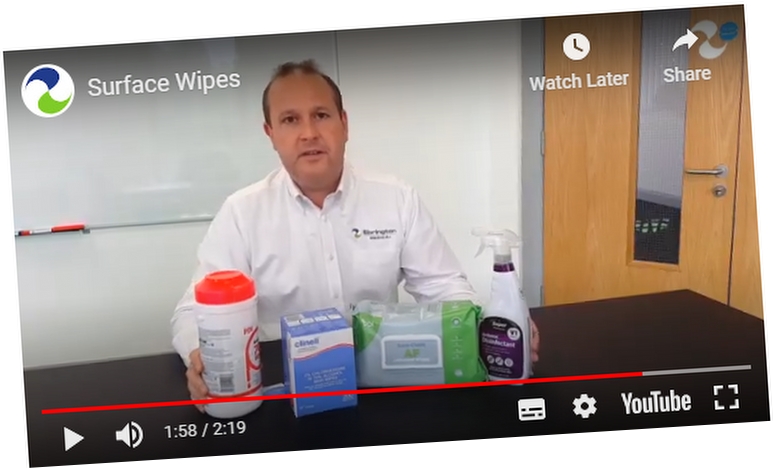
We've also created a practical overview covering different wipe types for surfaces, equipment and skin preparation.
Read our guide: What Wipe On Which Surface?
70% IPA disinfection products available from Ebrington Medical
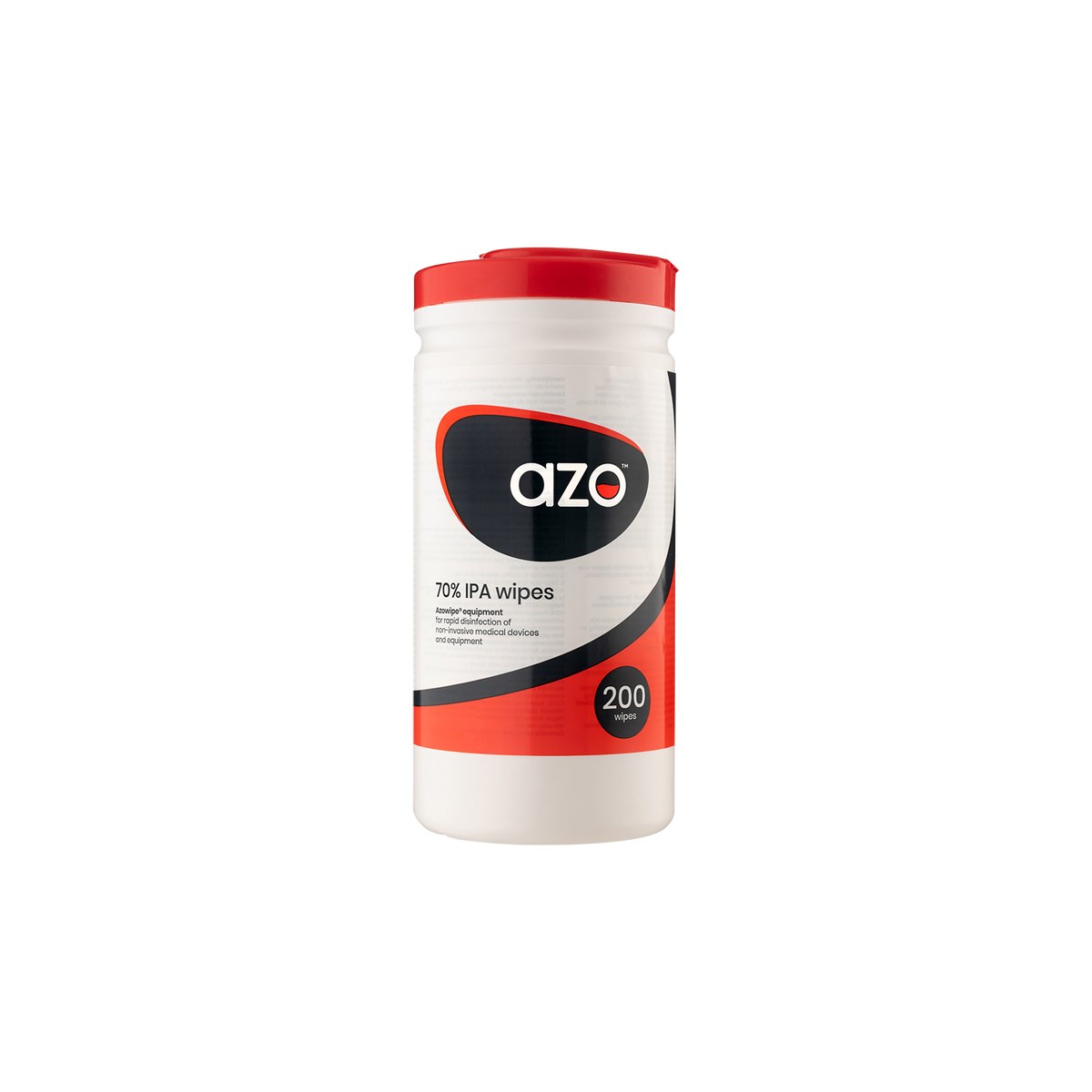 70% IPA disinfection products available from Ebrington Medical
Where a 70% IPA disinfectant is appropriate for the equipment and application, Ebrington Medical supplies Azo® IPA wipe and spray formats for suitable hard, non-porous surfaces.
The current range includes Azo® 70% IPA disinfectant wipes and spray, alongside sterile double- and triple-bagged IPA wipe options for applications with additional controlled-environment requirements.
Selected products are available through HSC Contract 5841745.
The appropriate product should always be selected against the equipment manufacturer's instructions, required efficacy, product contact time and local infection prevention policy.
 117417
 40002854