

 Healthcare procurement is often treated as a price exercise.
 What Do You Actually Want From a Healthcare Supplier?

Most healthcare buyers want broadly the same things from their suppliers.
Competitive pricing matters, but so do:
- reliable stock availability
- consistent product supply
- straightforward ordering
- responsive service
- fewer urgent purchases
- predictable deliveries
- commercial flexibility
- support across multiple locations
The difficulty is that some of these benefits are difficult to create if the relationship only exists one purchase order at a time.
If every routine order begins with a fresh request for price and there is no visibility of what is likely to be required next month or next quarter, your supplier has very little information to plan around.
That can keep the relationship transactional.
- The supplier quotes.
- You order.
- The product is delivered.
- Then the process starts again.
For frequently purchased medical consumables, there may be a better way to use the buying activity that already exists.
Your Purchasing Volume May Be More Valuable Than You Think
 Healthcare organisations can purchase substantial quantities of routine supplies without necessarily recognising the value of their total demand.
A single clinic might place relatively modest orders.
A GP practice may purchase case by case.
Different sites within the same healthcare group may place their own orders independently.
Look at those purchases individually and the volume may appear unremarkable.
Look at the same demand across ten, twenty or fifty locations over a full year and the picture can be very different.
The purchasing volume often already exists. It simply needs to be made visible and consolidated.
This is particularly relevant for:
- GP federations
- private healthcare groups
- clinic networks
- community healthcare organisations
- multi-site providers
- organisations with central procurement but decentralised ordering
By understanding your combined requirement, you can have a different conversation with suppliers.
Instead of:
“What is your price for ten cases?”
the discussion can become:
“We expect to use approximately this quantity across our organisation over the next twelve months. What can we do differently?”
That creates far more scope for a meaningful procurement discussion.
If You Want More From a Supplier, Give Them More to Work With
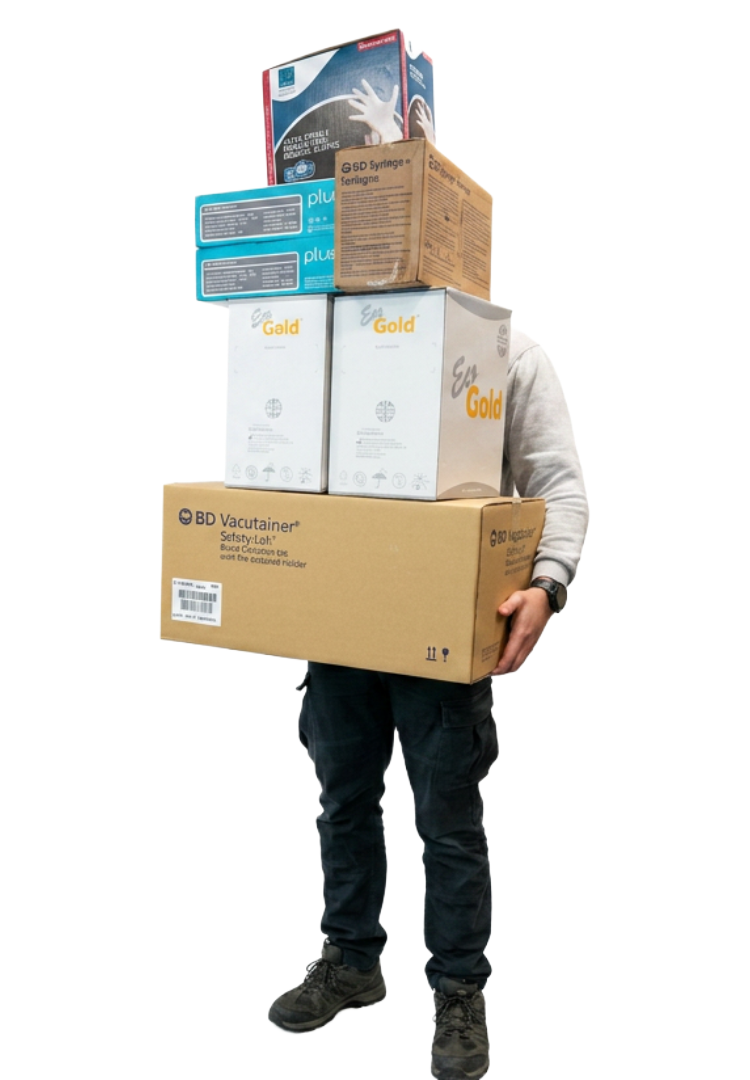
Healthcare buyers naturally want suppliers to be flexible.
You may want better pricing, stronger stock availability, quicker responses or more reliable supply.
But those things become easier to explore when the supplier has a clearer understanding of your likely future requirements.
For example, if you can identify a reasonably predictable quarterly or annual requirement, your supplier may be able to plan around that demand.
Depending on the products, purchasing model and commercial arrangements involved, that could create opportunities around:
- volume-based pricing
- planned stock holding
- scheduled deliveries
- call-off arrangements
- consolidated ordering
- multi-site distribution
- product standardisation
- forward planning
The important point is that none of this necessarily requires you to take a year’s worth of stock at once.
What matters is the visibility.
If you want more from a supplier than a price, you need to give them something more than an isolated order.
Volume Commitment Does Not Mean Filling Your Storeroom

One of the obvious concerns with volume purchasing is storage.
Most GP practices, clinics and healthcare sites do not want months of medical consumables occupying valuable space.
But purchasing commitment and physical delivery do not have to be the same thing.
An organisation may be able to agree or forecast a larger overall requirement while continuing to receive stock in manageable quantities.
Depending on the arrangement, this could include:
- monthly deliveries
- phased deliveries
- call-off orders
- deliveries to individual sites
- agreed replenishment schedules
This allows you to use the scale of your overall purchasing without necessarily increasing the amount of stock held locally.
For multi-site organisations, it can be particularly useful.
The buying power may sit at group level while the product still needs to arrive at individual locations in sensible quantities.
The Lowest Price Is Not Always the Lowest Procurement Cost

Price comparison remains an important part of good healthcare procurement.
But unit price should not be considered in isolation.
There can be wider costs associated with repeatedly purchasing routine medical supplies.
These may include:
- time spent requesting and comparing quotations
- multiple purchase orders
- multiple deliveries
- invoice processing
- duplicated supplier accounts
- emergency ordering
- delivery charges
- inconsistent products across different sites
- staff time resolving stock shortages
- unnecessary product variation
A supplier that appears marginally cheaper on one order may not necessarily create the lowest overall cost once the full procurement process is considered.
For predictable consumables, the more useful question may be:
What is the most efficient way for us to buy this product consistently?
That shifts the focus from individual transactions to the overall purchasing model.
Constantly Shopping Around Can Limit What a Supplier Can Do for You
 Healthcare buyers should benchmark pricing and make sure they are receiving fair commercial value.
That does not mean every routine order has to start from zero.
If a supplier has no confidence that the next order will come to them, they have very little reason to plan specifically around your future demand.
From the buyer’s perspective, that can matter.
You may want a supplier to reserve stock, support a particular product range, improve pricing or create a more tailored delivery arrangement.
But if the relationship is entirely transactional, those options can be harder to develop.
This does not mean committing blindly to one supplier.
It means recognising that there is a difference between healthy market benchmarking and repeatedly moving predictable orders for very small differences in spot price.
A more structured supplier relationship can sometimes create value that is difficult to see on an individual quotation.
How Multi-Site Healthcare Organisations Can Use Their Buying Power
 Multi-site organisations have an additional opportunity because purchasing demand can easily become fragmented.
Individual practices or clinics may be buying the same type of consumable from different suppliers, at different prices and in different pack sizes.
That can make total demand difficult to see.
Consolidating healthcare purchasing across sites can potentially support:
- better visibility of total spend
- stronger volume discussions
- fewer suppliers
- simpler procurement administration
- more consistent product ranges
- improved demand forecasting
- better stock planning
- standardised purchasing processes
It may also identify unnecessary product variation.
If multiple sites are buying several versions of the same routine product, there may be an opportunity to standardise where clinically and operationally appropriate.
That can make both procurement and stock management simpler.
Again, the opportunity does not come from inventing new purchasing volume.
It comes from recognising and organising the demand that already exists.
Which Medical Supplies Are Most Suitable for This Approach?
 A planned purchasing arrangement is generally easiest to explore where demand is repeatable.
Examples might include product categories where:
- the same items are purchased regularly
- consumption is relatively predictable
- multiple sites use the same products
- specifications are established
- purchasing patterns are unlikely to change substantially
- storage and shelf life can be managed appropriately
The objective is not to commit to the largest possible quantity.
It is to identify products where future demand can be estimated with enough confidence to improve the way they are purchased.
Routine consumables can be particularly suitable because even relatively modest weekly or monthly usage can become significant when considered across a full year or multiple healthcare locations.
When a More Flexible Purchasing Model May Be Better

Not every product should be purchased through a volume commitment.
There are circumstances where maintaining flexibility may be more appropriate.
For example:
- demand is unpredictable
- a product is being trialled
- clinical requirements are changing
- product specifications may change
- individual sites have substantially different needs
- shelf life is a concern
- future usage cannot be estimated reliably
A good supplier relationship should allow for this distinction.
The objective is not to force every product into a volume agreement.
It is to identify where greater visibility and planning could genuinely improve procurement.
A Better Supplier Relationship Starts With a Better Conversation

The most productive healthcare supplier relationships often begin when the conversation moves beyond:
“How much is this product?”
Price will always matter.
But there are other useful questions to ask.
- What are we purchasing across the whole organisation?
- Which products do we order repeatedly?
- Can our requirements be consolidated?
- Can we standardise any of these products across sites?
- Can deliveries be planned more efficiently?
- Could a supplier hold or plan stock against expected demand?
- Are we creating unnecessary administration through repeated small orders?
- Are we giving suppliers enough visibility to offer us something better?
These questions change the nature of the supplier conversation.
Instead of simply asking for a cheaper transaction, you are asking how the supply arrangement itself could work better.
From Supplier to Supply Partner

A supplier relationship does not have to stop at price, order and delivery.
For the right product categories, a more structured relationship can give both sides greater visibility.
For the healthcare organisation, that may mean more predictable supply, easier ordering, stronger commercial terms and less time spent managing routine purchases.
For the supplier, it means having enough information to plan around the customer’s real requirements.
That is where volume becomes more valuable than a simple quantity discount.
It creates something both sides can work with.
Healthcare procurement will always involve benchmarking, negotiation and cost control.
But if you repeatedly purchase the same products throughout the year, it is worth asking whether your supplier relationship is helping you do more than place orders.
Because if all you give a supplier is an isolated order, an isolated price may be all you get back.
Talk to Ebrington Medical About Your Purchasing Requirements

Ebrington Medical works with healthcare organisations purchasing routine medical consumables across individual and multi-site settings.
If your organisation repeatedly purchases the same products, or if demand is spread across several locations, it may be worth looking at the requirement as a whole rather than one order at a time.
By understanding expected volumes, ordering patterns and delivery requirements, we can explore whether there are opportunities for more efficient purchasing, appropriate volume pricing, planned supply or consolidated arrangements.
Sometimes the biggest procurement opportunity is not finding another supplier.
It is getting more from the supplier relationship you already know how to build.

 117417
 40002854