
Why Glove Material Choice Matters in Clinical Settings
A busy practice can get through thousands of pairs of gloves a week, so the material that you stock is an important procurement decision. If you choose poorly, you may risk allergic reactions among staff and patients, gaps in compliance, or ultimately, a false economy where a cheaper box actually costs more in waste and lost time.
Many UK practices now use latex-free (nitrile) gloves as standard policy, with latex reserved only for specific cases. We've put together this handy guide to clearly compare the two so you can find which one suits your team.

Nitrile Gloves: Strengths and Best Uses
Because nitrile is a synthetic rubber, it contains none of the natural rubber latex proteins that cause Type I latex allergy. That removes a risk for staff and patients alike, and it makes policy far simpler to enforce.
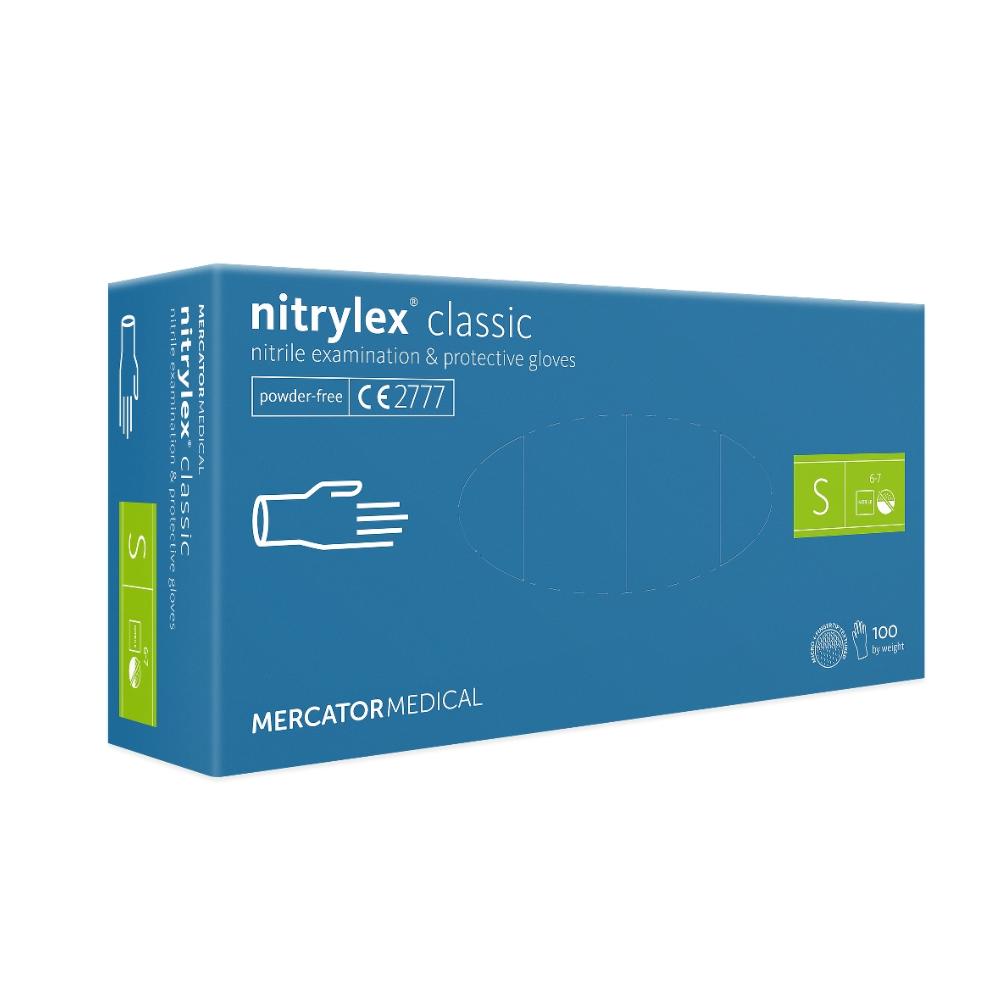
Nitrile also offers strong puncture and chemical resistance, making it a good fit for handling cytotoxic drugs, for cleaning and decontamination tasks, and general examination work.
Nitrile was once considered inferior to latex for tactile sensitivity, but modern formulations have largely closed that gap. It has historically cost slightly more per unit, although the difference has narrowed considerably.
 Latex Gloves: Strengths and Best Uses
One of the great things about natural rubber latex is its exceptional elasticity, fit and tactile sensitivity, and some surgeons still prefer it for fine dexterity work. It's also biodegradable, unlike the synthetic alternatives.
The key drawback, however, is the risk of Type I latex allergy in both staff and patients. This is a serious and well-documented concern, and it's why infection prevention guidance favours latex-free options where possible. For that reason, latex is best reserved for settings that have a documented latex-allergy screening process in place.
Key Differences at a Glance
| Feature | Nitrile | Latex |
|---|---|---|
| Allergy risk | No natural latex proteins | Risk of Type I allergy |
| Puncture resistance | Strong | Good |
| Chemical resistance | Strong | Lower |
| Tactile sensitivity | Very good in modern formulations | Exceptional |
| Cost | Slightly higher, gap narrowing | Slightly lower |
| Biodegradability | Generally no | Yes |
 Which Type Should Your Clinic Choose?
By using this simple decision framework, you can keep your procurement of gloves consistent:
- Known latex allergy in staff or patients: use nitrile. Latex should not be used.
- Chemical or cytotoxic handling, or high puncture-risk tasks: choose nitrile.
- Fine surgical dexterity work in a latex-safe environment: latex may still suit.
- General examination and triage: either works, so you can let practice-wide policy decide for consistency.
For most practice managers, the practical answer is to standardise on nitrile and treat latex as the documented exception. A single default glove reduces the training burden, simplifies ordering and lowers the chance of the wrong material reaching a patient with an allergy. Where surgeons require latex, restrict it to those areas and confirm your allergy screening is robust before ordering. It makes sense to review the policy annually as your patient numbers change.
Eb-Med stocks both of these materials, so you can match the glove to the task. Unicare Nitrile suits everyday examination work, while Sterile Nitrile covers procedures that need a sterile field.
For settings with robust allergy screening, Sterile Latex, Vibrant Powder Free Latex and Latex Surgeons Gloves are available.
 Choosing Your Default Glove
Glove material is a small decision that has large consequences for safety, compliance and budget. For most practices, nitrile is the safest default, with latex kept for clearly defined, risk-assessed uses.
Browse Eb-Med's full medical gloves range to compare options and order with confidence. For more detail, read our guide to EN 455 Standards Explained and our general glove buying guide.

 117417
 40002854